This post may contain Amazon or other affiliate links that allow us to earn a small commission at no extra cost to you. Please see our Disclosure Policy for more info.
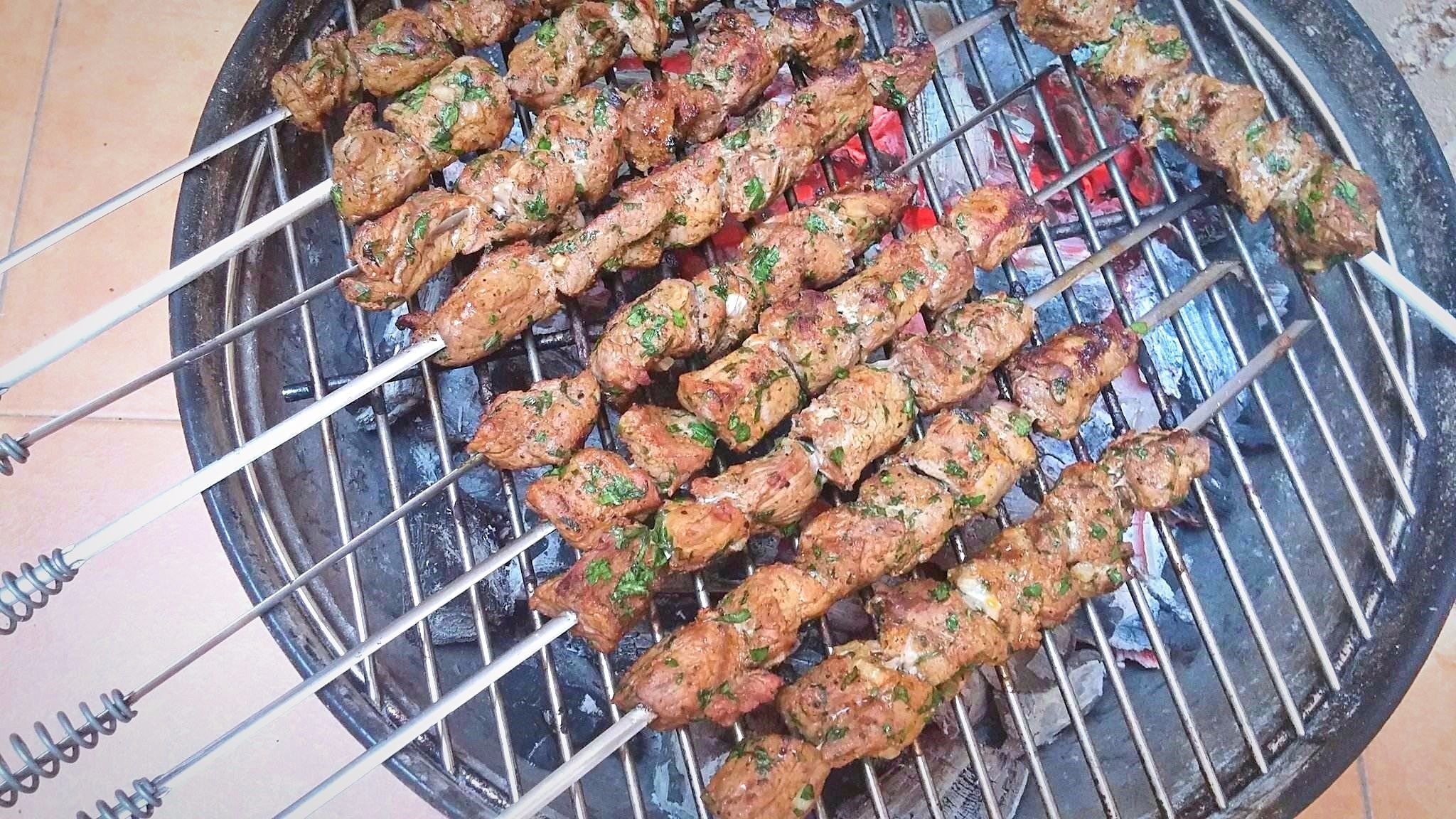
In Morocco, lamb or beef brochettes are known simply as kebab or by Arabic words for skewers—qotban, qodban and sfafed. They're a popular street food year-round and a favorite when grilling at home, especially around the time of Eid al Adha, when many families make qotban using meat from the sacrificial animal.
Moroccan qotban is a sibling of Turkish shish kebab. Moroccans marinate the meat differently but more importantly they cut the meat smaller. In Morocco, the kebab is all about alternating cubes of lamb or beef with cubes of fat. (Fat is also added to skewers when making other kinds of brochettes.) You don't need to eat the fat, but do try to use it as it adds incredible flavor and helps keep the meat moist.
The Moroccan Kebab
The Moroccan use of the word "kebab" differs from the use of the term in many other countries, where it refers specifically to skewers of ground meat (kofte or kefta). I struggled a bit with this while living in or visiting other countries, especially those with an Ottoman influence.
In Morocco, we don't go to fancy restaurants to eat kebab. When the craving hits, each of us has a favorite fast food joint that specializes in this. The bigger the city, the longer the list of options becomes.
Each weekly market also has a section devoted to grilling, and national roads leading into main cities have coffee shops and restaurants serving brochettes and tagines of all sorts. As example the city of Khemisset used to be famous for the quality of its grills, and the kefta dyal gharb from there was especially a treat.
Kebab usually comes with a seasoned fresh salad of tomatoes and onions; cucumber can be added. Depending on where you order it, it may also come with fries and green olives. Bread is always part of the deal while a cold drink or hot tea may need to be ordered separately.
Some fast food places have started adding white sauce and cheese to this wonderful sandwich. I find it just wrong but since it's still around, that means some people like it.
At home, we cook kebab of all sorts over an oblong brazier (called kanoun or mejmar) full of glowing coal, which means waiting 25 to 30 minutes for the high flames to calm down before grilling.

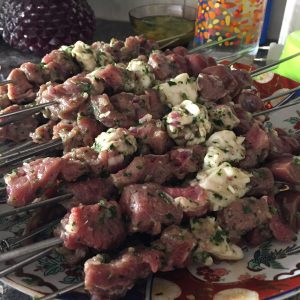
Moroccan Lamb or Beef Kebabs Recipe - Qotban, Qodban or Sfafed
Suet is traditionally threaded between the cubes of meat for flavor and moisture. If you don't care to eat the fat, you can discard it when removing the cooked meat from the skewers. You can also omit it altogether if you prefer.