
This post may contain Amazon or other affiliate links that allow us to earn a small commission at no extra cost to you. Please see our Disclosure Policy for more info.
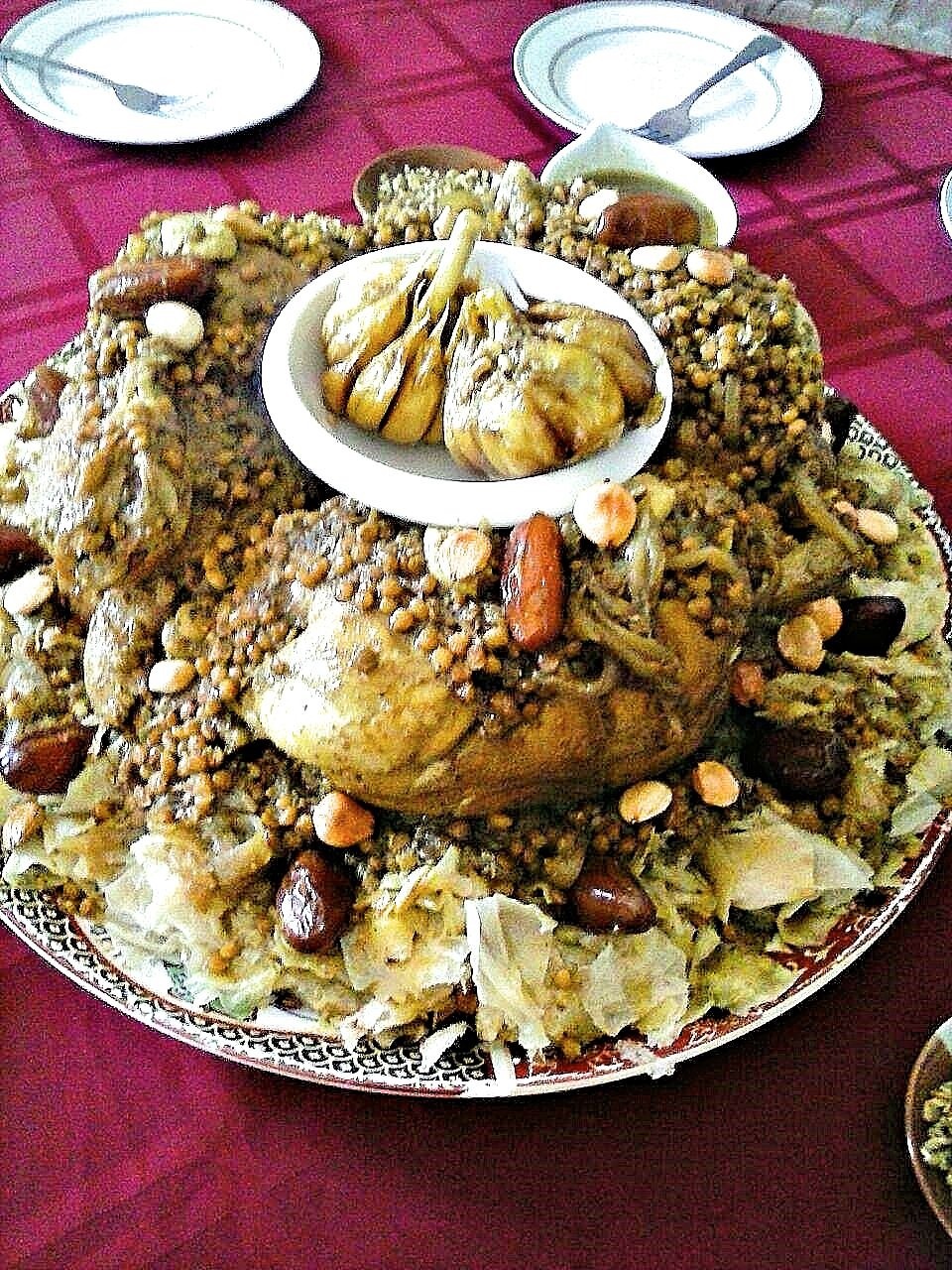
One of the Moroccan dishes which I consider most notable is rfissa, a trid-like feast of chicken, lentils and heavily-seasoned broth over shredded bread. Although rarely as elegantly presented as shown here, a huge platter of rfissa is nonetheless impressive and appetizing, and its phenomenal blend of flavors make it a favorite among Moroccans and others who are fortunate enough to be introduced to it.
I first sampled and fell in love with rfissa shortly after giving birth to my first daughter, as it's long been Moroccan tradition to serve rfissa at that time. That is likely due to fenugreek (helba) being a key ingredient, an herb which is well known to be beneficial to nursing mothers. Rfissa is also commonly served as a special occasion meal, when entertaining, or simply as a family dinner that helps redefine comfort food.
This version of rfissa, shared by Jameela Khiyati, is a specialty of her native Meknes, where it's known locally as bormache. It sets itself apart with seasoning that includes lots of garlic, several dried herbs – wild oregano (za'atar), pennyroyal (fliou) and a mint (merseta) – as well as additions of cayenne pepper and tomatoes. The standard fenugreek, saffron, ginger and ras el hanout will be more familiar while lentils are optional.
Bormache and other rfissa variations are most often served atop a bed of shredded msemen or trid, a type of pastry-like crepe. Sometimes it's served over crumbled harcha, a semolina skillet bread which is similar in texture to cornbread. In a pinch, you could also serve it over shredded stale bread or shredded store-bought flat bread.
The prep time below does not include the time involved for making the bed of msemen. In Morocco, we can buy msemen or trid pastry already shredded for this purpose, but many cooks still prefer to make their own. This task can be done while the chicken is cooking, but I recommend making it ahead of time, shredding it while warm, then freezing until needed.
Marinating the chicken a few hours or overnight is optional but recommended. Use a free range chicken (djaj beldi) for best results. It takes longer to cook and is a bit more gamey, and therefore is better suited to this dish. If you do use a regular chicken, note that it must be removed from the pot when cooked to avoid having it fall apart while the stew finishes.