This post may contain Amazon or other affiliate links that allow us to earn a small commission at no extra cost to you. Please see our Disclosure Policy for more info.
Following a gluten-free diet can be challenging anywhere, particularly when it's mandated by a medical condition such as celiac disease, which requires avoiding even tiny traces of gluten. When my daughter was put on a gluten-free, yeast-free diet several years ago, we discovered that helping her adhere to such a regime was all the more difficult in Morocco. Here's why.
Wheat and Grains Are Moroccan Staples
Despite Moroccan cuisine's diversity in terms of influences, flavors, ingredients and dishes, there is an incredible reliance on wheat, semolina, barley and and other grains as staples. Bread especially is considered integral to most meals, so you'll see it served for breakfast, again at lunch, and chances are very good that it will also be on the table in the evening. If that sounds like overkill, it's not regarded as such by a majority of Moroccans, many of whom would argue that even between meals nothing satisfies more than a wedge of homemade Moroccan bread (khobz), a small bowl of olive oil and a glass of Moroccan mint tea.
Limited Selection and High Cost of Gluten-Free Products
The variety (and availability) of specialty gluten-free products is considerably more limited than in the US or Europe, and what little can be found here is quite pricey to boot. Consider this: a kilogram of regular all purpose flour costs about 6 dirhams (60 cents) while a kilogram of gluten-free flour will set you back between 70 to 100 dirhams ($6 to $10) or more. Ouch.
High prices can hurt anywhere, but factor in lower average incomes in Morocco as compared to European countries and the US, and you can see why gluten-free products become outright burdensome for the average family to afford. The Moroccan newspaper Hesspress (the article is in Arabic) recently covered this issue, as well as the problematic lack of gluten-free kitchen staples such as cooking oils, vinegars, spices and more.
Most Commercially Packaged Foods Are Off Limits
There is an astonishing list of everyday food products, condiments and oils that are off limits because they "may contain gluten" or do "contain traces of gluten" even though the list of ingredients would indicate otherwise. There is also greater risk of cross-contamination in Moroccan products in general, either at the processing and packaging stages or at the points of sale. That means that those with gluten sensitivity or celiac disease must avoid many Moroccan brands of butters, yogurts, cheeses, cooking oils, condiments, stock cubes, tomato paste, chocolates, powdered sugar, baking supplies and more. The rule of thumb here is not to consume any commercial food product unless it is explicitly labeled sans gluten or gluten free, or you've done your own homework to verify that it's okay to consume.
Spices and Preserved Foods Can Be a Problem Too
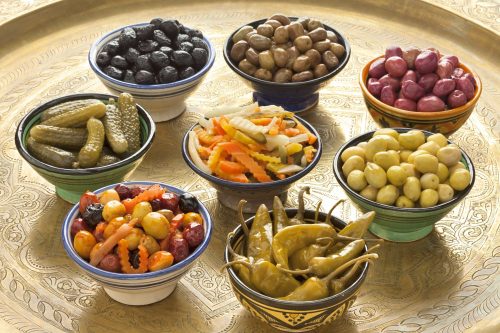
The majority of Moroccans buy their spices and condiments such as olives, harissa and preserved lemons from vendors who display these goods in open stock fashion. It is quite common to find the bins and barrels in the same space as grains and flours. Scoops, scales, and grinders may all be used for multiple products with no cleaning in between. That means the risk of cross contamination is especially high, even though the foods themselves wouldn't normally be a risk. For that reason, you may want to stick to making your own condiments, or be very selective about eating foods prepared with them when you can't be sure of the source.
Spices, even when commercially packaged, might be prepared in a plant where grains and flours are processed. Paprika in particular is a concern and we were cautioned specifically about it. This spice shows up in Moroccan cooking quite a bit—chermoula and seasoned kefta are examples—but additives containing gluten are commonly used to avoid caking. Who would have known?! This presents a real hidden danger to those with celiac disease, particularly when eating at someone else's home or eating out. Some Moroccans therefore make their own paprika or go to great lengths to source it from a safe vendor. I now bring my paprika and cayenne pepper into Morocco from the US, where I buy a brand that's known to be gluten free.
Gluten Might Be Hiding in Toiletries and Pharmaceutical Products
Even personal care products may contain gluten, so there is a need to be cautious when purchasing shampoos, lotions, soaps and other everyday toiletries. Sometimes there really is no way of knowing that gluten may be in such a product unless you've either been alerted to the fact or you've made a concentrated effort to find out.
The same applies to over the counter and prescription medicines and creams. Inactive ingredients such as grain-based starches may contain gluten, or a pharmaceutical company may be unwilling to guarantee that all sourced ingredients are gluten-free or that cross-contamination didn't occur at their plant. They may, however, claim that their medicines are produced and packaged in highly controlled environments where cross-contamination is extremely unlikely. Even so, keep in mind that standards in Morocco may not be as stringent as in other countries.
Moroccan Friends and Family Might Not Fully Support Your Gluten-Free Diet
Among Moroccans there is still a general lack of understanding about celiac disease. Some have never heard of it. Among those who are aware, there exists a tendency to downplay the importance of adhering to a gluten-free diet. It's even common for family members to express annoyance at the extra effort required to avoid cross-contamination in a home kitchen, or to encourage others to "eat just a little, it won't hurt you!"
Those with celiac often feel alone and on the fringe of social events and family gatherings. Not only can they not eat foods that everyone else is enjoying, but they can't follow tradition and eat communally from family dishes. And, their own specially prepared dishes need to be kept far away from flying crumbs, careless cooks or general passing around of unsafe foods.
It's Risky to Eat Out if You're on a Gluten-Free Diet
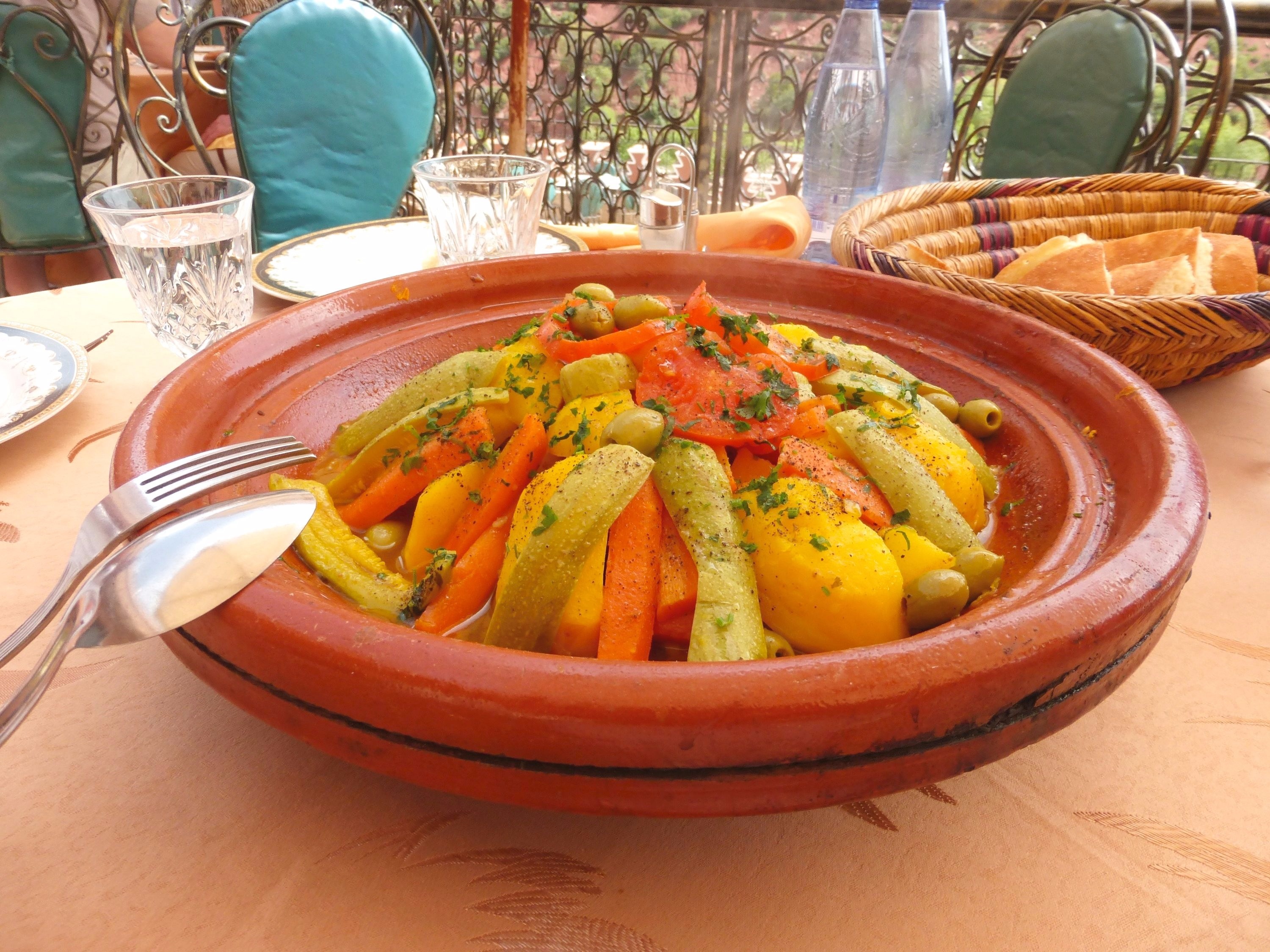
All of these issues come into play when someone on a gluten-free diet must decide whether or not to eat out in Morocco. Here in Casablanca there are some restaurants that list certain menu items as gluten-free or sans gluten, but those with celiac should still order cautiously. It's unlikely that those foods are being prepared in a separate kitchen space, and many restaurants may unknowingly be using spices, oils and condiments in their cooking that are not marked gluten-free. Even dishes such as the tagine shown above is at high risk of cross contamination before it reaches the table. This could occur while it's being prepared or even from contact with bread crumbs on a server's uniform.
Adapting to a Gluten Free Diet in Morocco
With all of these challenges, what can a person newly diagnosed with celiac diesease or gluten sensitivity do about their everyday diet in Morocco?
For starters, make simple adaptions that allow you to enjoy some of the offerings at a typical Moroccan meal. You can try making your own gluten-free Moroccan bread, which works as well as regular khobz for dipping up sauces and scooping up salads and main dishes. Bread can be replaced with rice or gluten-free pasta, tagines can be prepared with certified gluten-free ingredients and eaten with a fork, and gluten-free crackers or rice cakes can be used as the base for open-faced sandwiches and spreads, or to dip into cooked salads such as carrots with chermoula.
Experiment with different gluten-free flours and flour mixes and learn to make gluten-free tortillas and wraps, and gluten-free cakes and cookies. Some traditional Moroccan recipes for sweets, such as Coconut Ghoribas, are easily adapted. Others may take a bit of experimenting to get just right. If you're on a yeast-restricted diet as well, make some homemade leavening to use in your baking and be careful to select gluten-free flour mixes that don't include yeast.
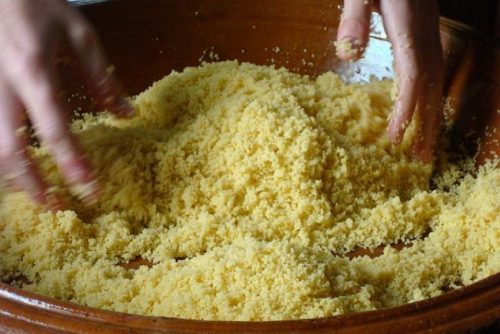
You can also try to work with different grains in your cooking. As example, cornmeal can often replace semolina in Moroccan cookie and bread recipes and both millet and corn grits can be used to make couscous. (The grits get steamed in the same manner as regular co