This post may contain Amazon or other affiliate links that allow us to earn a small commission at no extra cost to you. Please see our Disclosure Policy for more info.
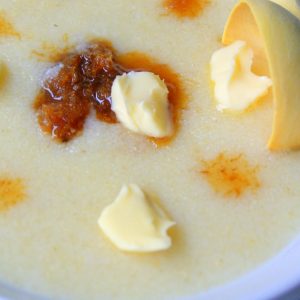
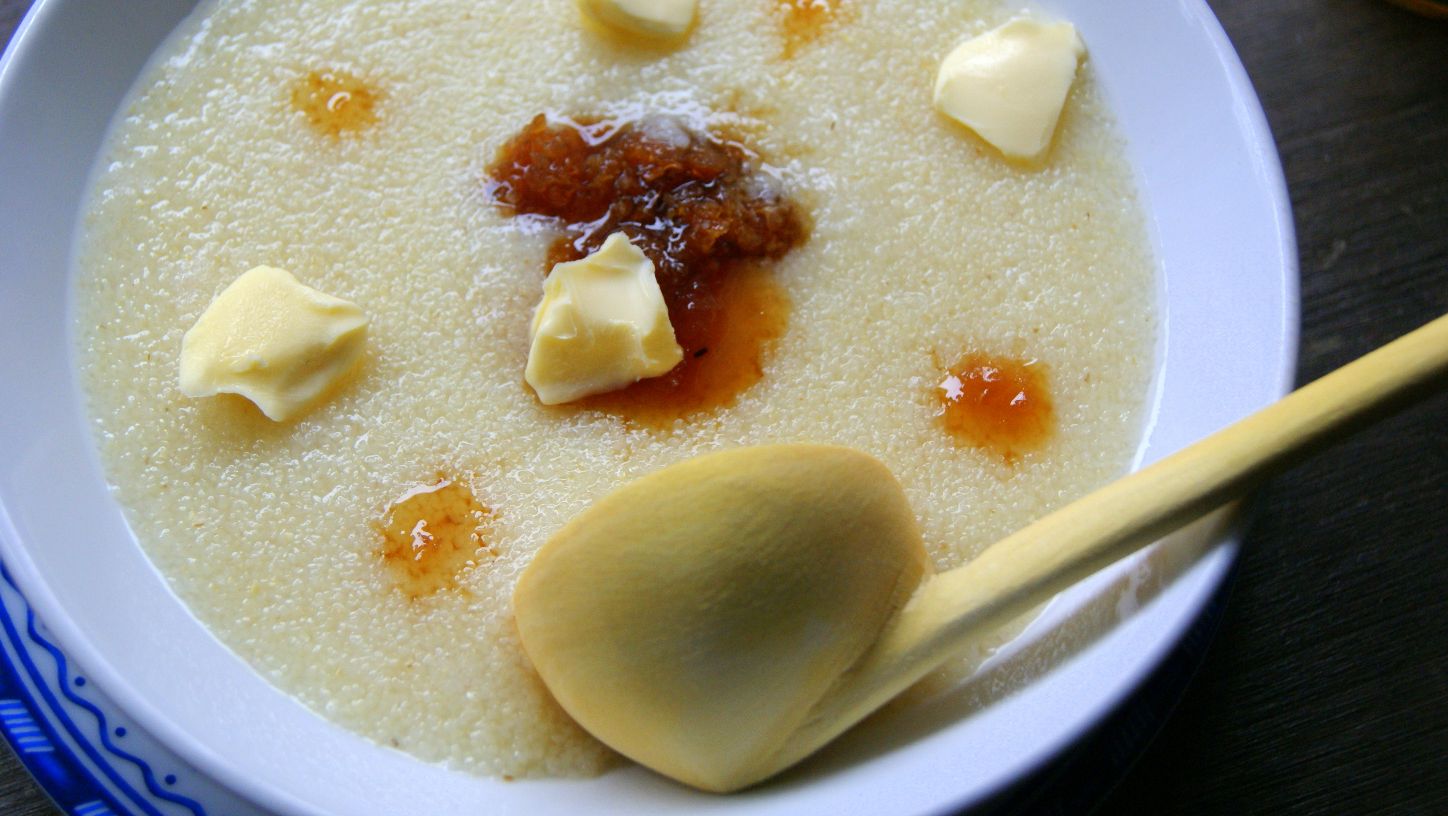
Assida, La'assida, L'a'ssida العصيدة or Taraouit (near Marrakesh) is a thick porridge of semolina which is enjoyed across the Arab world. It's an easy, frugal and bland dish with a Bedouin background. Basic ingredients are semolina (or flour in some countries), water and salt. However, a garnish of butter and good honey elevates assida to another level. Some like more honey than others, so we serve bowls on the side for the gourmands. I don't blame them, I'm a self-confessed one.
Assida and Eid al Mawlid
In Morocco, Algeria and Tunisia, assida is traditionally served for breakfast on Eid al Mawlid, for it is said to have been one of the preferred dishes of the Prophet Mohammad ﷺ. Tunisian cuisine has a richer array of assidas made with nuts, but the basic white assida remains a cornerstone for this commemorative day.
Light and unctuous, it's a family favorite, especially when Eid al Malwid falls in cold days.
What to Do with Cold Assida (Semolina Porridge)
Assida becomes thick and compact as it cools, and if you have wandered in the old city of Fez, you may have seen people selling squares of cold semolina pudding sprinkled with sugar and cinnamon—such a treat for children after school.
Another option is while the assida is still not set yet, you could stir in some raisins and sultanas. Jazzed-up assida becomes a nice semolina pudding to serve after meals; we just flip it onto a serving dish and decorate it with toasted and caramelized nuts.
And if you don't want to bother cooking dinner, thin leftover assida with water and/or milk and heat it; you will have a warm vegetarian soup in no time.
The Difference Between Assida and Tagoulla (Tagulla)
We generally make assida with durum wheat semolina of medium caliber. It's thinner than Tagoulla, which is a classic Amazigh dish generally made with cracked corn but sometimes other grains. Tagoulla takes longer to cook, depending on the caliber of the crushed grain, which can vary from from roughly cracked to a coarse grit. ). It is served with amlou, honey and a form of fat (Lidam) called oudi (clarified butter) or just olive oil. Note the combination of olive oil and honey, which we are so fond of in Morocco.
Considering its porridge-like consistency, assida has to be eaten with a spoon, unlike tagoulla, which the Amazigh people scoop with their hands in the traditional way. Both dishes need to be served warm and thicken as they cool down.