
This post may contain Amazon or other affiliate links that allow us to earn a small commission at no extra cost to you. Please see our Disclosure Policy for more info.
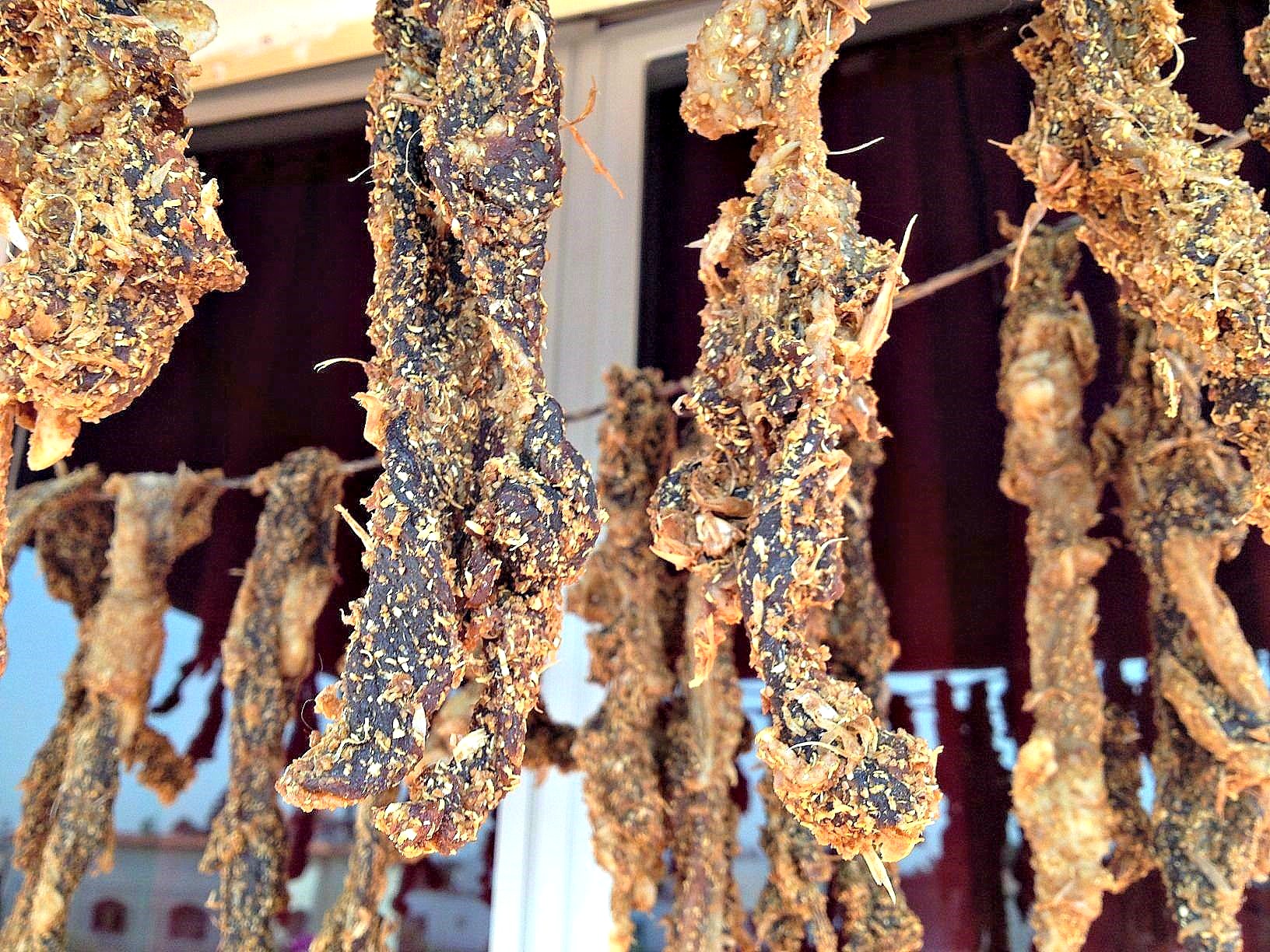
Thousands of years ago, people developed ways to preserve and store food for as long as possible. In the Maghreb where Morocco is located, sun drying cured meat was one such way. Moroccan families inherited this ancestral method and continue to use it in modern times— particularly during Eid al Adha—to make gueddid (or qaddid) as well as tichtar, a nomadic version of dried camel meat. Many Moroccans also cure and preserve marinated intestines, bones and stuffed stomach.
During sun-drying, the massive reduction of moisture in the meat via exposure to hot and dry air, and a combination of salt and vinegar in the curing marinade, help limit if not stop microbial growth while also protecting against insects. Gueddid and other meats preserved this way can be stored for months in the cupboard at room temperature.
We're lucky that Eid al Adha has been falling in warmer months for the last six years or so. Not only does hot weather help ensure that gueddid is of good quality and well dried, but it also speeds up the drying process. I once witnessed gueddid made in just four days from start to finish due to a mid-summer average temperature of 104° F (40° C), which is common in cities such as Fez and Marrakesh. It was so hot that the meat was fully dehydrated after three days of sun exposure. Under normal conditions it takes around a week.
For this reason we generally try to make gueddid during hot weather in preparation for winter. However, since Morocco is blessed with sunshine most of the year, we can make dried meat year round if an occasion calls for it. In cooler weather we must hang the meat outside for a longer period of time, and we watch the weather forecast closely in expectation of rain. I can remember sitting in the living room with my family and suddenly my mother shouting, "Drops of rain!" or "Le'ghmam!" in reference to heavy clouds. We immediately jumped into action to save the gueddid from picking up moisture. We ran outdoors, collected the strips of meat from the clotheslines, and were ba