This post may contain Amazon or other affiliate links that allow us to earn a small commission at no extra cost to you. Please see our Disclosure Policy for more info.
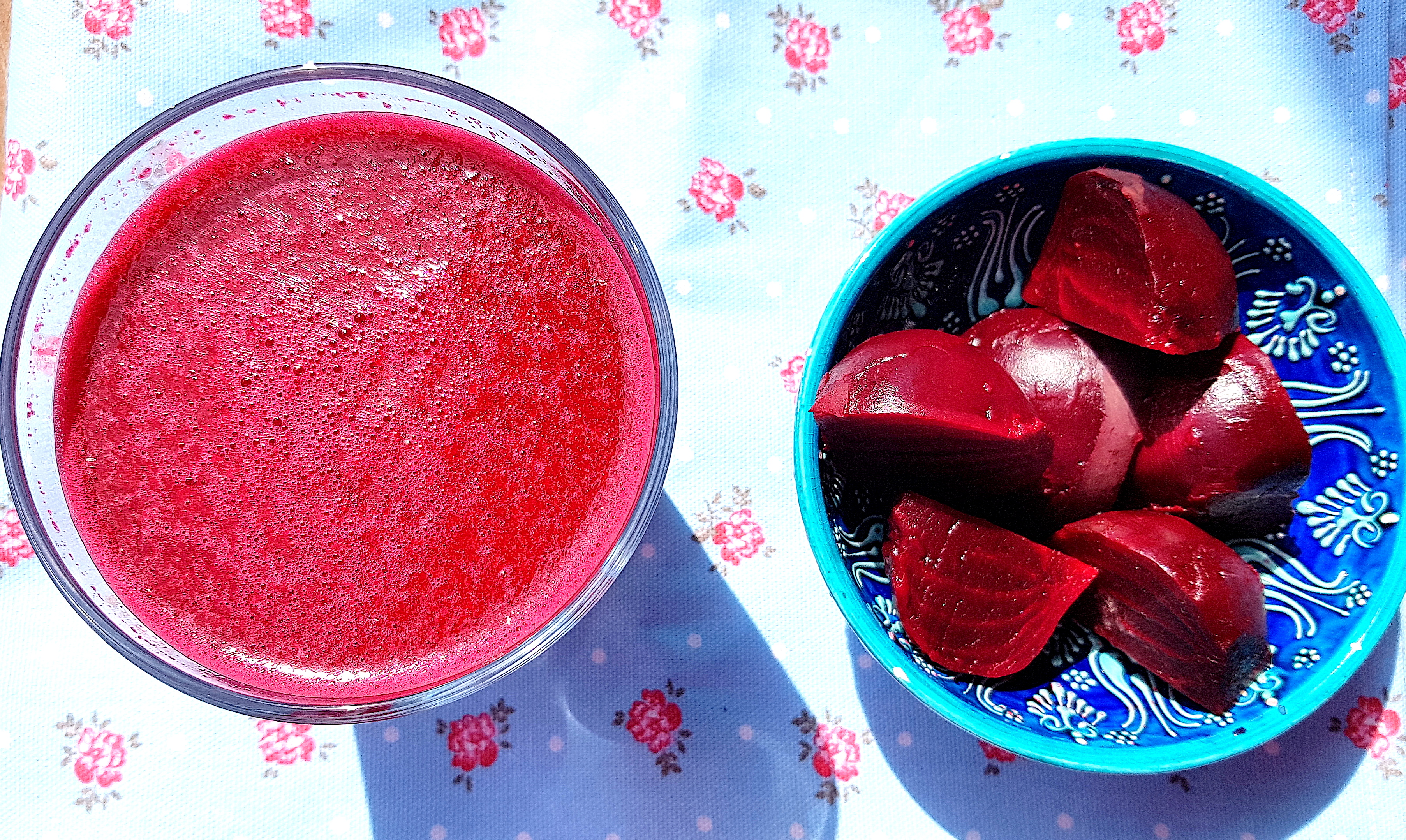
In Morocco, beetroot is usually served as a raw grated or cooked beet salad with a light vinaigrette and a sprinkle of parsley as garnish. But we also give this healthy vegetable another treatment—we make a refreshing Moroccan beetroot juice that's flavored with orange juice and orange blossom water. Sugar is usually added in generous quantities and the juice is thinned with either the cooking water from steaming or boiling the beets, or alternatively with just plain cold water.
There is another unusual ingredient added to Moroccan beetroot juice and unless you try it, you may find it weird. That ingredient is vinegar. Don't be tempted to omit it as it really does enhance the overall flavor of the juice.
In Fez, where this beverage is very common, Moroccan beetroot juice is usually served after lunch or with dessert to help digest a copious meal. In our family, we often serve beetroot juice or radish and orange juice at the end of a family gathering.
You can use precooked and packed whole beetroot sold in supermarkets, but as usual, fresh beets that you cook yourself are best. As for the orange juice, freshly squeezed is a must.
Beetroot juice is a healthy morning boost
I learned somewhere that drinking beetroot juice in the morning has many health benefits, so I am now having it at least a couple of times a week for breakfast. Those health benefits are apart from the usual excessive addition of sugar. But honestly, when in Morocco, the oranges are so sweet that adding sugar is not needed.
I usually make enough juice for three days, thinning it with water or orange juice as needed since it thickens as it sits and chills.