This post may contain Amazon or other affiliate links that allow us to earn a small commission at no extra cost to you. Please see our Disclosure Policy for more info.
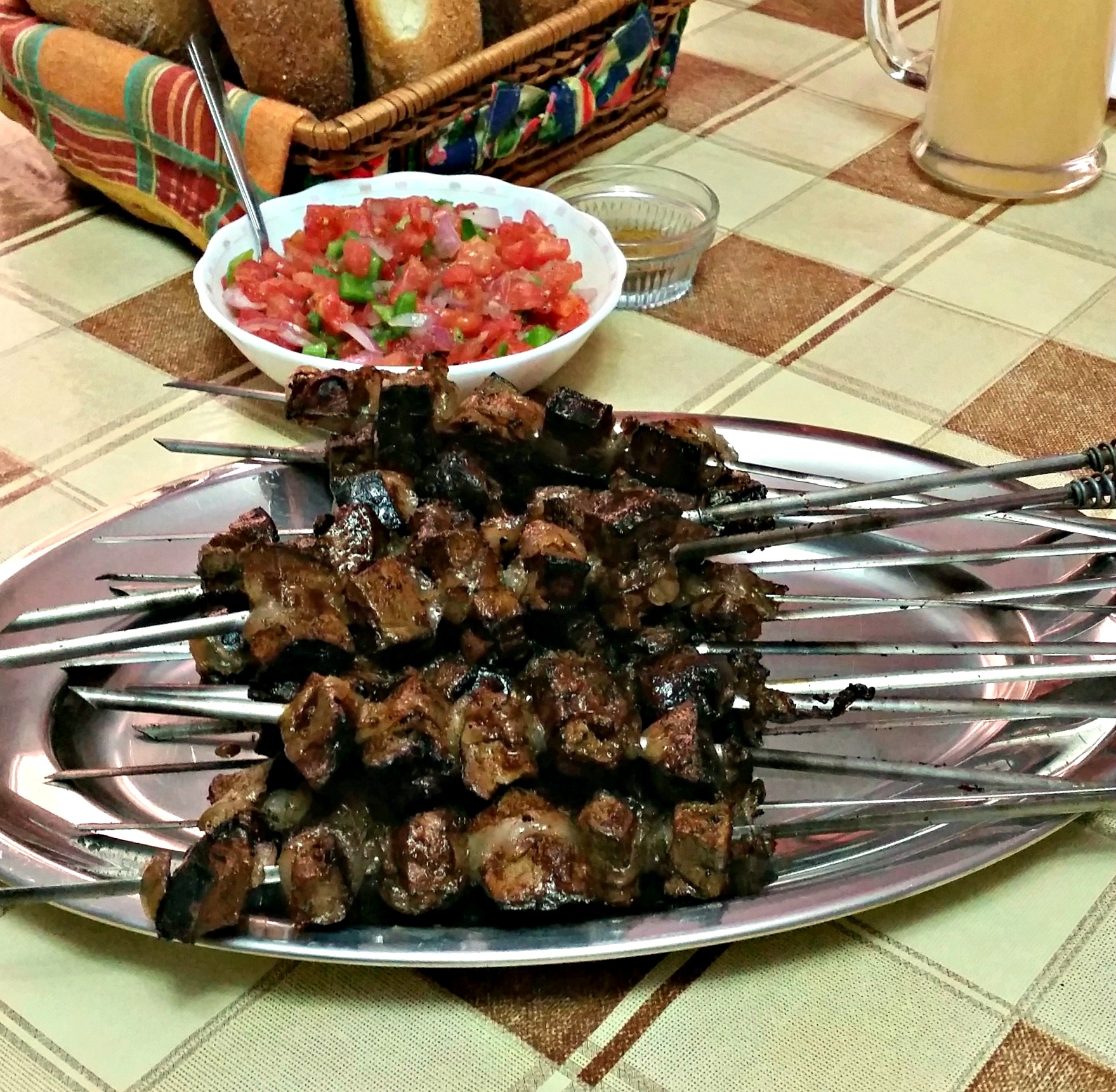
Boulfaf is Morocco's answer to a bacon-wrapped kebab and a much-loved variation of traditional liver brochettes known as kouah.
To make boulfaf, seared and seasoned beef liver or sheep liver (kebda) is cut into cubes and wrapped with thin, lacy strips of caul fat which, once cooked, add delicious crispy texture and flavor.
It's this wrapping (Arabic verb: laffa) of the caul fat around the liver that led to the name of the dish, and it's what distinguishes boulfaf from everyday kouah.
Boulfaf can be made any time of the year, but the kebabs are strongly associated with the first day of Eid al Adha (Eid al Kabir), when Moroccans traditionally cook the liver, heart, and other offal which are on hand after the home slaughter of a sheep, goat, or less commonly, a cow. The caul fat, which surrounds the animal's internal organs, is acquired at this time as well.
As the liver and heart are usually the first organs ready to be grilled and served, boulfaf tends to be the first dish prepared after the sheep has met his end; it's usually eaten between breakfast and lunch time, sometimes even while the work from the slaughter continues.
Considering the small quantity of liver in a single sheep, family members may end up with anywhere from one cube of boulfaf to a whole skewer (the lucky ones!) so it's really considered something to tickle the taste buds. One has to be around at that very moment it's served to grab a portion.
This isn't necessarily the case when multiple sheep are involved, such as when extended families gather for eid or when a single family slaughters two sheep.
My family continues the tradition of doing two sheep which means enough heart and liver will be on hand to make both kouah and boulfaf skewers. Most of the actual meat, however, is offered as sadaqa (charity) to families who can't afford a sheep of their own.
As tempting as it may be to eat the liver right off the skewer, Moroccans are just as likely to make a sandwich out of the brochettes by stuffing the liver into Moroccan bread along with salad, onions, and other fillers.
For a truly traditional experience, enjoy the liver kebabs outdoors, offering Moroccan Mint Tea as a beverage.
If you want to reproduce the flavors of boulfaf but can't find caul fat, you can still opt to make kouah; simply alternate every several cubes of liver with cubes of suet (fat from around the kidney). It takes just a few minutes to grill over the barbecue and it's ready.