This post may contain Amazon or other affiliate links that allow us to earn a small commission at no extra cost to you. Please see our Disclosure Policy for more info.
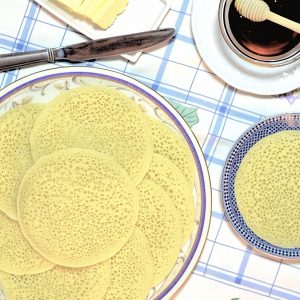
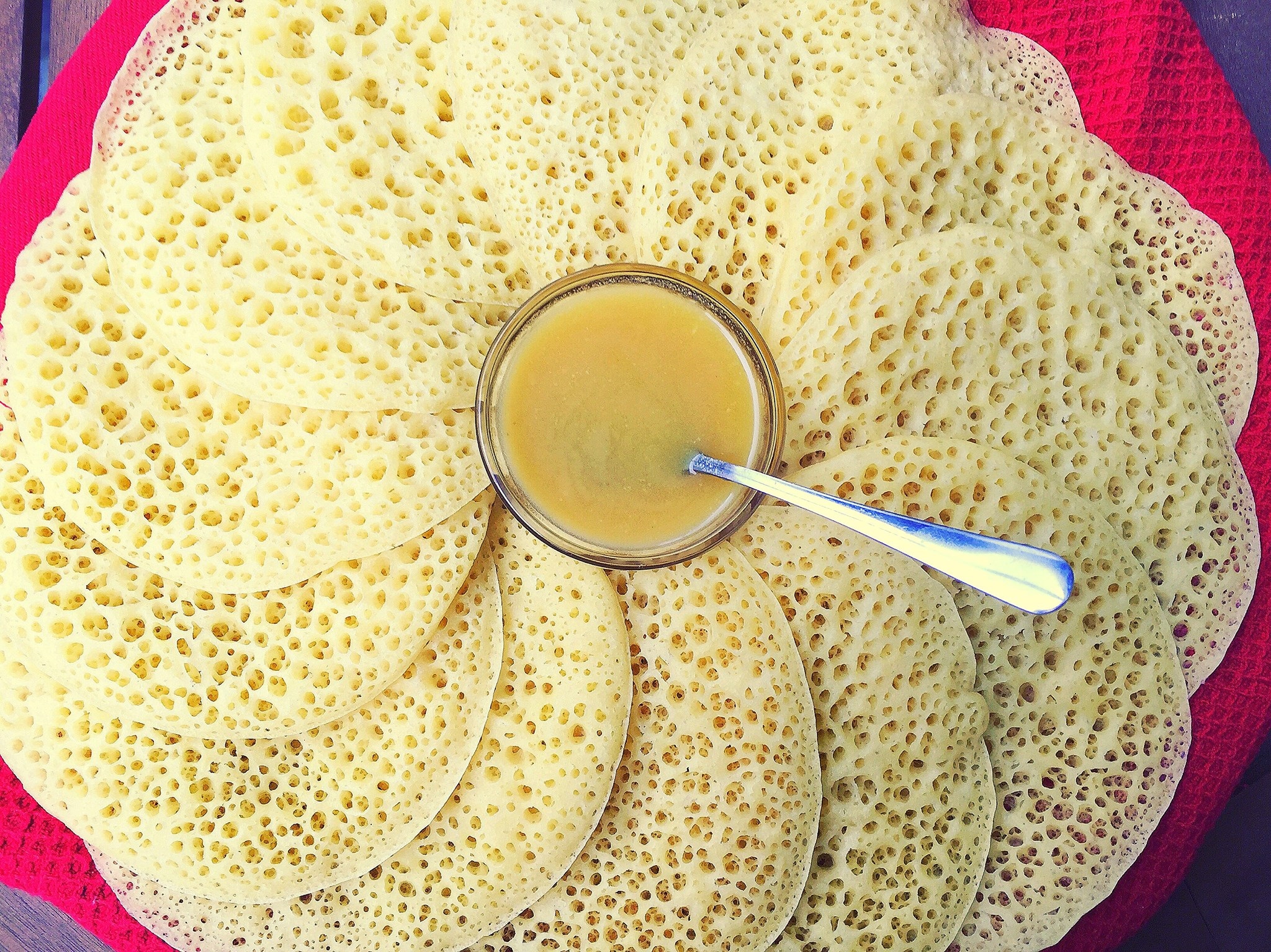
Beghrir or baghrir are spongy, melt-in-your-mouth Moroccan pancakes made from a crepe-like semolina batter. Light and tender, the pancakes are characterized by a unique honeycomb-like appearance. This is a result of yeast in the batter, which causes hundreds of bubbles to rise and break on the surface of the beghrir while it cooks.
Beghrir are rarely eaten plain. Instead, a sweet topping transforms them into a special breakfast or tea time treat. Moroccans are most likely to enjoy them dipped in a syrup made from butter and honey; or they might be served with butter, honey and preserves or jam on the side.
Beghrir are usually cooked only on one side. However, in some regions the cooks will flip them over briefly; in that case they might be called khringos. A very similar pancake is used to make Arab qattayef or atayef, which utilizes the lacy pancakes as a wrap for various fillings. Although not traditional, Moroccan beghrir can certainly be used in the same way.
Fine semolina or durum flour is usually regarded as key to a good beghrir. You'll find recipes which use all semolina or part semolina, but all should have the yellow color associated with the semolina. The smaller the ratio of semolina to other flours, the less yellow the end result will be. Unfortunately, sometimes here in Morocco we find beghrir for sale that's just a bit too bright in color—a dead giveaway that a bit of turmeric or additive was thrown in to color an inferior batter.
Years ago, beghrir batter needed to rest quite a while before it was ready to use. The introduction of baking powder to the batter sped things up considerably, so you'll sometimes see recipes using it labeled as "instant beghrir." Some versions include eggs and milk; others do not.
I find my version below to be the most reliable for consistent, good results. If your own pancakes don't look like the ones in the photo, check the recipe notes for tips on adjusting the consistency of the batter or trying a different pan.